IMEC: Washington’s Alternative to the Belt and Road Initiative?
A US-backed corridor from India to Europe is Washington’s answer to China’s Belt and Road. But conflict across the region is testing whether it can be built at all.
The India-Middle East-Europe Economic Corridor (IMEC) could be assessed as an emerging, United States-backed alternative to China’s Belt and Road Initiative (BRI). This major trade and infrastructure project seeks to promote shorter transportation routes, supply chain diversification, and energy connectivity at the regional level, with significant geopolitical implications. IMEC does not aim to copy the BRI; instead, the participating states can pursue their strategic and economic interests through a connectivity architecture that strengthens regional cooperation and stability. Consequently, the US is backing an initiative that contributes to interstate integration and connectivity.
At the 2023 G20 Summit, world leaders unveiled their plans for a multinational infrastructure initiative that would upgrade connectivity among South Asia, the Middle East, and Europe through trade, energy, and digital integration (Khan, A. M., 2023). This project, known as IMEC, was partially envisioned to counterbalance the BRI and was based on an advanced system of logistics and digital connectivity. This initiative was to consist of two main segments: an Eastern Corridor linking India to the Gulf and a second corridor linking the Arabian Peninsula to Europe through the Levant and the Mediterranean, using railroads and maritime routes (Murdoch, 2026). Its diverse infrastructure, such as deep-water ports, advanced railways, electricity grids, and high-speed data cables, was planned to reduce shipping costs by 30% and transportation time by 40% (Ghosh, 2026). Taking these parameters into account, it is clear that IMEC was intended to compete with other major trade initiatives, such as the BRI, with the long-term aim of establishing regional connectivity, cooperation, and stability.
IMEC would address difficulties in transportation and shipping by reducing time and costs, tackle the vulnerabilities of international trade routes, such as the Suez Canal blockage and Houthi attacks on commercial ships in the Red Sea, and advance stabilization in the Middle East via financial and trade interdependence. Therefore, this economic corridor contributes to the rationalization of the supply chain between the European Union and India, its main supplier (Brumercikova et al., 2025), and plays a major role in US foreign and security policy by preparing the ground for further cooperation and regional integration.
Connectivity and Economic Integration
IMEC was presented as a transregional connectivity initiative that would contribute to multinational cooperation and intensify economic integration among India, the Middle East, and finally Europe by reducing excessive reliance on existing trade routes. At a fundamental level, this project would be structured around three main connectivity pillars: multimodal transport corridors, energy linkages, and digital infrastructure networks (Tonchev et al., 2026, pp. 9-10). Therefore, considering these three dimensions, it is straightforward to interpret that the project not only aimed at infrastructure development but also reflected economic resilience and diverse connectivity routes.
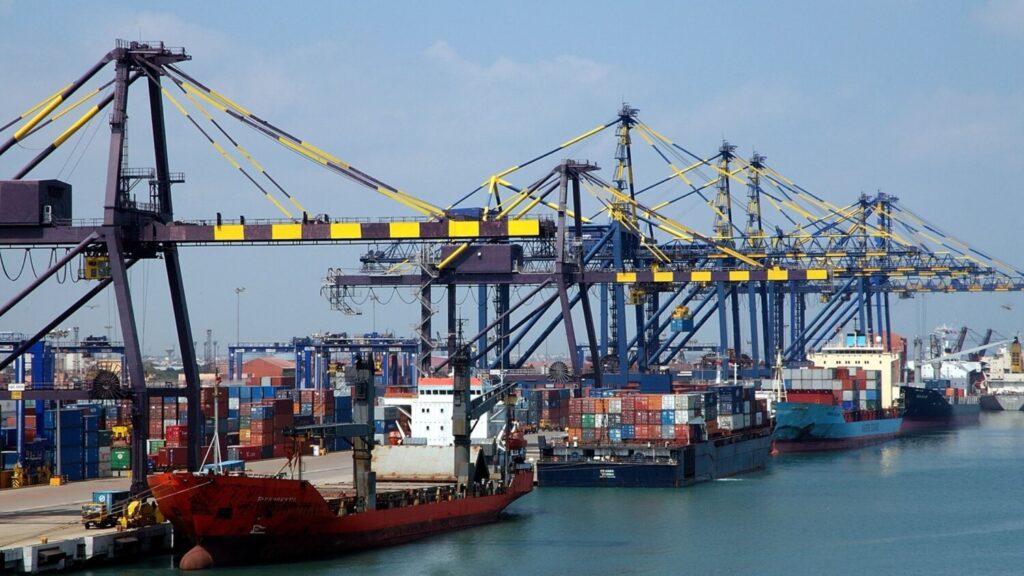
Regarding the transport section, IMEC aims to change traditional trade routes by establishing new patterns on a regional scale, such as an advanced railway network starting from the UAE, passing through Saudi Arabia and Jordan, and finally reaching Israel. This system contains time-efficient routes, high-speed freight trains capable of high-speed transport, and deep-water ports linked with the railway stations, where the cargo ships will deliver the goods from India (Khan, K. H. et al., 2024, pp. 150-151). These ship-to-rail transit corridors through the Arabian Peninsula will first give the passing states’ consumers and producers better access to European and Indian markets, and second, they are estimated to reduce the time of transportation by 40% and the transit costs by 30% (Monroe, 2023).
Equally forward-looking is the green energy pillar that IMEC is promoting. This project envisions the construction of electricity grid interconnectors through subsea and terrestrial transmission cables, enabling interregional trade of electric power. Gulf states’ low solar-power generation costs benefit both the EU and India as energy importers, both by reducing the price of solar energy and by lowering their exposure to external supply disruptions. Moreover, the plan to incorporate clean hydrogen pipelines into the corridor is an alternative proposal for the green energy transition (Suri et al., 2024). Several Indian, Saudi Arabian, and UAE energy companies have invested heavily to promote green hydrogen as an alternative to fossil fuels, seeking to ensure affordable, sustainable, and secure energy (Tonchev et al., 2026).
The digital connectivity component is highly critical considering the technological developments occurring worldwide. This part of the project proposes the installation of high-speed fiber optic data transmission cables between Europe and South Asia, which is crucial for economic growth and regional integration (Bastanifar et al., 2024, pp. 4-6). International telecommunication networks, financial transactions, digital trade, artificial intelligence, and computing services need to be housed in a secure environment, built by the states that participate in this project, in order to avoid espionage and conflicts that may arise in the Middle East region (Tonchev et al., 2026). IMEC intends to limit China’s digital interests by advancing member states’ contribution and initiative in high-speed data cables, to disrupt Chinese corporations’ dominant presence in this strategic region (Suri et al., 2024). The successful execution of this project would give partner countries the opportunity to create their own regulatory and cybersecurity frameworks.
The Geopolitical Landscape
In addition to examining IMEC’s economic impact at both the regional and international levels, it is essential to consider the geopolitical context in which this initiative has emerged. On the one hand are regional powers, with their historical and religious relations, strategic interests, and policy responses to such a major project. On the other hand are Western powers, such as the EU, which is seeking low-cost energy and trade diversification, and the US, which is seeking to balance China’s outreach in the region. All have a massive impact on the trajectory of this corridor (Bastanifar et al., 2025, pp. 3-4). There is no doubt that, over the years and especially recently, several conflicts in the region where IMEC is being formed have changed the way international trade is conducted. The Hamas attacks of October 2023, the Red Sea Crisis of November 2023, the Israeli and US airstrikes against Iran in 2025, and the recent Houthi attacks on Saudi Arabia are major examples that highlight the geopolitical fragmentation and fragility of the region. The corridor that emerged has faced significant geopolitical challenges that it must overcome to fulfill the expectations it envisioned (Vij, 2026).
IMEC’s design was built on ambitious geopolitical assumptions. First of all, the land bridge through Saudi Arabia, Jordan, and Israel would depend on progressive Saudi-Israeli normalization. Moreover, the deep-water ports would remain secure in a stable Gulf, avoiding the clashes in the Red Sea region and Houthi attacks. Finally, regional cooperation and stability would be at such a level that trade routes could be extended easily without external setbacks (Middle East Council on Global Affairs, 2025). However, relations among the region’s nations are tense, and the political will to establish peace and stability remains elusive.
United States’ Backing for IMEC
Besides the states where the corridor passes through, IMEC plays a critical role for another Western power, the United States. For the US, IMEC serves its strategic interests in the Middle East as leverage to promote regional stability and security through economic integration, and to minimize these states’ dependence on the emerging Chinese trade influence (Sacks, 2023). Peace and stability in the Middle East are a significant part of national security architecture and foreign policy decision-making. After the 2023 Hamas attacks against Israel, the dynamics changed, and Washington sought measures to restore balance in the region beyond military intervention. IMEC was an ideal opportunity to enhance relations between Israel and the Arab countries. The inclusion of Israel reflects Washington’s long-term approach to Middle Eastern stability, advocating for the country’s political integration within the Arab world to alleviate tensions and foster mutual economic gains (MacKenzie, 2024). In this context, IMEC could be an extension of the Abraham Accords, paving the way for further diplomatic normalization between Israel and the Arab states.
Moreover, for Washington, IMEC could be regarded as a countermeasure to China’s expanding trade routes in the Middle East, especially after the 2023 peace agreement signed in Beijing between Saudi Arabia and Iran. This event not only revealed China’s dynamic presence in the region but also highlighted its emerging role in the reconciliation of two rival regional powers (Zhang, 2024). If economic corridors such as IMEC are successful, security and resilience will be established across the states they pass through, creating the prospect of economic growth. IMEC could be seen as an effort to respond to Saudi Arabia’s and the UAE’s tilt toward China, facilitate economic integration between Israel and the Arab world, and promote an alternative to Russian energy supplies (Sacks, 2023). The US has tried to strengthen its partnerships in the Asia-Pacific region, responding to evolving Chinese influence and especially the BRI through connectivity projects such as IMEC. Washington committed significant funds to IMEC’s energy projects, promoted interstate cooperation, and urged member states to reduce their dependence on the Chinese supply chain. Remarkably, IMEC encouraged US policy on regional collaboration without demanding that the participating countries choose between Washington and Beijing, since the main goal was to enhance regional relations and achieve mutual economic growth (Anwar, U. et al., 2026, pp. 801-803).
IMEC and BRI Comparison
There is no doubt that world powers such as China, Russia, India, and the US seek various improvements to advance their regional influence and strategic interests, often through trade and economic engagement, which are regarded as key instruments of geopolitical influence. Trade and connectivity routes such as the BRI and IMEC effectively serve the goal of economic expansion (Anwar, U. et al., 2026, p. 793). However, each has different objectives and addresses the needs of its founding states. The BRI represents part of China’s grand strategy, which promotes economic integration by building transport and energy infrastructure and linkages, not only in China’s neighborhood but also along historic and critical trade routes all the way to Western Europe. Through this project, China sought to deepen and expand various sea, air, and land linkages from the Indo-Pacific to Eurasia and Africa, further integrate its main centers of economic vitality, and provide development assistance to its poorer regions (Chance, 2016, pp. 10-11). The biggest advantage of the BRI, according to China, is the win-win situation it offers all partner countries, thanks to trade expansion, infrastructure funding, foreign investment plans, access to low-cost markets, and a high connectivity level. Its unique character was the key to enhancing China’s geo-economic strength and reach through trade integration (Anwar, K., 2023).
On the contrary, IMEC is not aimed at a consumption-led growth concept, like the Chinese model, because it takes advantage of the existing complementarities. Establishing a trade and connectivity corridor, proposing alternative routes to avoid external clashes, and providing various linkages and highly efficient, pioneering infrastructure are the major goals of IMEC. Moreover, unlike the BRI, which is singularly funded and overseen by the Chinese government, the aspirations of IMEC’s various economies, with their economic and social heterogeneities, need to be reconciled around a single goal, making interstate collaboration more complex to align with market conditions (Suri et al., 2024). Besides that, IMEC was designed to meet the needs of all participating nations, which is why all members, including the private corporations involved, are taking the initiative to improve their infrastructure and maximize efficiency, rather than relying on a single leading state, like China, to supervise and direct the whole project (Anwar et al., 2026, pp. 803-804). Finally, the participating states’ effort to reduce reliance on China’s supply chain, together with the economic and regional integration that IMEC projects, pushed the US to back the initiative because of its strategic interests in the Middle East, especially after the Israel-Iran crisis (Katulis et al., 2026).
Conclusion
It appears that IMEC and the BRI are less a direct competition between similar infrastructure projects and more a manifestation of major changes in the structure of power at the regional and global levels. IMEC is mainly a geopolitical initiative: a strategic project inspired by India, greatly facilitated by the US, and aimed at balancing the growing influence of China by offering an alternative model of regional connectivity (Anwar et al., 2026). Despite its immense potential, IMEC confronts challenges stemming from the need to maintain a collaborative spirit across multiple states with varying ambitions, in an environment where regional clashes and armed conflicts are intense and continuous. The war in the Gulf and the closure of the Strait of Hormuz, disruptions in the Red Sea, the uncertainty surrounding Saudi–Israeli normalization, and the deterioration of relations among important regional actors have weakened the original design (Suri et al., 2024). Therefore, this ambitious corridor must overcome these challenges in order to reach the economic and connectivity benefits it envisioned. IMEC needs to be reconceptualized and equipped with a security component that was omitted three years ago. At the same time, the three pillars and their prospects of success need to be unbundled. As far as progress in digital connectivity is concerned, customs integration or selected energy projects must not be delayed until the entire transport infrastructure becomes politically feasible. Flexibility seems to be the key to achieving the proposed goals in such an uncertain and challenging region (Tonchev et al., 2026). The feasibility and success of both IMEC and the BRI in this region will depend on the shifting balance among the opposing actors, such as Saudi Arabia, Israel, Iran, and the US, as well as on the economic opportunities and the geopolitical and security needs present in the Middle East.
Bibliography
Anwar, K., 2023. The IMEC vs BRI: Taking the Cue. Plovdiv: Modern Diplomacy. Available at: https://moderndiplomacy.eu/2023/09/29/the-imec-vs-bri-taking-the-cue/
Anwar, U. et al., 2026. Competing Corridors: China’s BRI, India’s IMEC, and US Influence in the New Great Game. International Journal of Social Sciences Bulletin, 4(6), pp. 790-807. Available at: https://ijssbulletin.com/index.php/IJSSB/article/view/2468/2147
Bastanifar, I. et al., 2024. A recursive networking economic analysis of international economic corridors: IMEEC and INSTC. Cogent Economics & Finance, 12(1), pp. 1-18. Available at: https://www.tandfonline.com/doi/full/10.1080/23322039.2024.2363457
Bastanifar, I. et al., 2025. Applying dynamic TOPSIS: a multi-criteria decision-making approach to economic corridors under uncertainty — the case of IMEEC. Cogent Economics & Finance, 13(1), pp. 2-18. Available at: https://www.tandfonline.com/doi/epdf/10.1080/23322039.2025.2558028
Brumercikova, E. et al., 2025. Supply chains between the European Union and India. Transportation Research Procedia, 87, pp. 150-161. Available at: https://www.sciencedirect.com/science/article/pii/S2352146525003655
Chance, A., 2016. American Perspectives on the Belt and Road Initiative. Washington, D.C.: Institute for China-America Studies. Available at: https://chinaus-icas.org/wp-content/uploads/2017/02/American-Perspectives-on-the-Belt-and-Road-Initiative.pdf
Ghosh, N., 2026. IMEC and the Future of Global Connectivity. New Delhi: Observer Research Foundation. Available at: https://www.orfonline.org/expert-speak/imec-and-the-future-of-global-connectivity
Katulis, B. et al., 2026. Three Long-Term Effects of Trump 2.0’s Middle East Approach on US Foreign Policy. Washington, D.C.: Middle East Institute. Available at: https://mei.edu/publication/three-long-term-effects-of-trump-2-0s-middle-east-approach-on-us-foreign-policy/
Khan, A. M., 2023. The India-Middle East-Europe Economic Corridor (IMEC): Too Little, Too Late? Washington, D.C.: Carnegie Endowment, Sada. Available at: https://carnegieendowment.org/sada/2023/12/the-india-middle-east-europe-economic-corridor-imec-too-little-too-late
Khan, K. H. et al., 2024. Integrating gravity models and network analysis in logistical strategic planning: a case of the India-Middle East-Europe Economic Corridor (IMEC). Maritime Economics & Logistics, 27, pp. 147-182. Available at: https://link.springer.com/article/10.1057/s41278-024-00289-x
MacKenzie, M. F., 2024. IMEC: America’s Uncertain Response to China’s Silk Road. New York: Foreign Policy Association. Available at: https://fpa.org/imec-americas-uncertain-response-to-chinas-silk-road/
Middle East Council on Global Affairs, 2025. IMEC’s Ambitious Gamble: Overcoming Geopolitical Obstacles in a Fractured Mediterranean. Doha: Middle East Council on Global Affairs. Available at: https://mecouncil.org/publication_chapters/imecs-ambitious-gamble-overcoming-geopolitical-obstacles-in-a-fractured-mediterranean/
Monroe, S. L., 2023. The India-Middle East-Europe Economic Corridor: An Early Assessment. Cairo: Economic Research Forum. Available at: https://theforum.erf.org.eg/2023/10/30/the-india-middle-east-europe-economic-corridor-an-early-assessment/
Murdoch, W., 2026. The India-Middle East-Europe Economic Corridor. Washington, D.C.: Middle East Institute. Available at: https://mei.edu/backgrounder/the-india-middle-east-europe-economic-corridor/
Sacks, D., 2023. Will the US Plan to Counter China’s Belt and Road Initiative Work? New York: Council on Foreign Relations. Available at: https://www.cfr.org/articles/will-us-plan-counter-chinas-belt-and-road-initiative-work
Suri, N. et al., 2024. India-Middle East-Europe Economic Corridor: Towards a New Discourse in Global Connectivity. New Delhi: Observer Research Foundation. Available at: https://www.orfonline.org/research/india-middle-east-europe-economic-corridor-towards-a-new-discourse-in-global-connectivity
Tonchev, P. et al., 2026. IMEC Three Years On: Time for a Rethink and Necessary Adjustments? Athens: Institute of International Economic Relations. Available at: https://idos.gr/wp-content/uploads/2026/09/IMEC-Report_14-9-2026-2.pdf
Vij, S., 2026. The Paradox of Resilience: IMEC and the Iran Conflict. New Delhi: Observer Research Foundation. Available at: https://orfme.org/expert-speak/the-paradox-of-resilience-imec-and-the-iran-conflict/
Zhang, Y., 2024. Crucial yet Limited: China’s Role in the Saudi-Iranian Rapprochement. Asian Journal of Middle Eastern and Islamic Studies, 18(3), pp. 243-359. Available at: https://www.tandfonline.com/doi/full/10.1080/25765949.2024.2411104
Featured image: MoPSW via Wikimedia Commons, CC BY-SA 4.0