The Game and the Film: Visibility, Verification, and Military Readiness
Comparing Taiwan’s live military exercises with China’s curated military documentaries reveals why visible performance is not proof of readiness, and how the limits of public evidence shape assessments of cross-strait military capabilities.
Military exercises and documentaries are built for different purposes, and treating them as equivalent windows onto readiness produces a distortion in how outside observers assess military capability (Bowe, 2025; Dauber, Robinson and Jones, 2024).
Taiwan’s Han Kuang 42 and the People’s Liberation Army’s 《制勝》 (The Road to Victory) ran concurrently in August 2026. Han Kuang generated evidence through interaction with an uncontrolled environment: roads, civilians, infrastructure, accidents, and time. On the other hand, The Road to Victory generated confidence through selection, showing what the director chose to show, ending when the director chose to end.
Treating these two events as equivalent windows onto readiness tells us less about Taiwan and more than is warranted about the People’s Liberation Army (PLA).
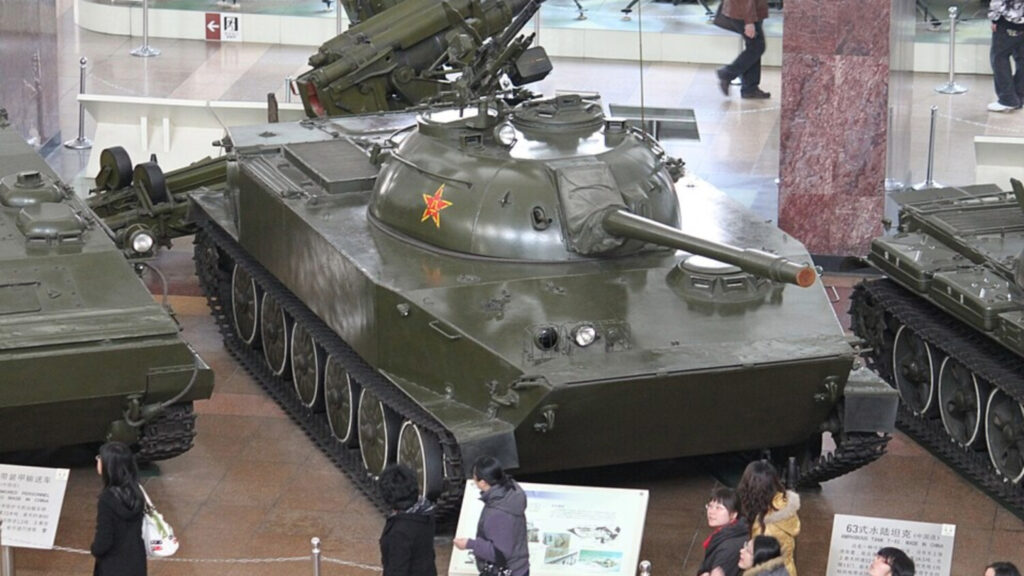
The M60A3 tanks left Hualien after dark on civilian flatbeds. It was day six of Han Kuang 42. The army could have moved them north under their own power, treads on Highway 9 and the Suhua route, but that burns fuel, cooks engines, and ties the movement to roads remaining open. A local hauler moved the tanks and CM-21 armored personnel carriers toward Yilan instead, cutting transit time roughly in half (Liberty Times Defence, 2026a; Storm Media, 2026).
Six days earlier, CCTV-1 had released the first episodes of The Road to Victory, six parts timed to the PLA’s 99th anniversary (i-Cable, 2026). Episode three, 《挺進深藍》 (Advancing Into the Deep Blue), belonged to the navy: the Sichuan, the first Type 076 amphibious assault ship, running a weighted test sled down its electromagnetic catapult deck (HK01, 2026). The cut is clean: ship, launch, no aftermath.
Taiwan has to show its work. The PLA can choose what work becomes a story.
Two Formats, Two Obligations
Han Kuang’s live phase ran August 5 to 14 (Ministry of National Defence, 2026), the longest in the exercise’s history. For the first time, two reserve brigades mobilized simultaneously at full strength: the Taipei Reserve Brigade in the north and the 137th Infantry Brigade in the south, more than 5,000 reservists in a single lift. The exercise closed on August 14.
Six days later the cabinet approved a proposed 2027 defence budget of NT$1.1225 trillion (Focus Taiwan, 2026), the first headline figure to cross the trillion mark, though it still has to clear a legislature that cut the last special defence bill from NT$1.25 trillion to NT$780 billion (Taiwan News, 2025).
The Road to Victory is not a new idea. 《攻堅》 (Assault) ran for the PLA’s 98th anniversary in 2025, the same format on the same fixed August 1 date (Bowe, 2025).
USNI Proceedings (2025) described prior Han Kuang iterations as ‘overly scripted, had limited free play, and involved enemy actions that stopped at the beach.’ Han Kuang 42 was built to break from that: to put the military system in contact with friction rather than stage its performance. The Road to Victory was designed to do the opposite.
The Audit That Arrived First
The most important finding of the summer came before Han Kuang began: counter-drone. Taiwan’s Audit Office published its FY2025 final-accounts review in late July (Audit Office, Republic of China, 2026), and Ministry of National Defence spokesperson Sun Li-fang answered questions on it at the Legislative Yuan on July 27, six days before the live phase (Liberty Times Defence, 2026b).
The report examined a NT$3.55 billion fixed-site UAV defence system built by the National Chung-Shan Institute of Science and Technology, or NCSIST (United Daily News, 2026a). It could not detect or jam the 5.1GHz band used by newer PRC drones, missed part of BeiDou-3’s navigation signal, and had little reach against fiber-optic or AI-guided aircraft that carry no jammable radio link.
Sun’s answer was specific. The system was designed in 2021 against four older commercial bands: 1.2, 1.5, 2.4, and 5.8GHz. China’s 5.1GHz drones appeared in 2023, after the specifications had been set. The NCSIST said the gap would be closed in an update (United Daily News, 2026a). A larger budget can pay for that but it cannot remove the finding from the public record.
Han Kuang had its own drone story. Units flew small aircraft for reconnaissance and strike more openly than in earlier cycles. The Air Force Fourth Wing ran a counter-UAV drill at airbases using the same fixed-site system alongside handheld jamming guns, simulating PLA raids on base perimeters (TVBS, 2026).
Lin (2025), assessing Han Kuang 41, found ‘service level improvement’ in counter-UAV capability but ‘incomplete kill chains’ at the force-wide level. Whether the same integration reached maneuver units in the field, Han Kuang 42’s public record does not say. That is a limit of the record, not proof either way.
Improvisation as Evidence
Earlier Han Kuang cycles treated the beach as the end of the story (USNI Proceedings, 2025; The Diplomat, 2025). This year the rear area had to work. A civilian trailer convoy hauled M60A3s and CM-21s from Hualien toward Yilan after dark (Storm Media, 2026; Liberty Times Defence, 2026a). Taitung units moved north to cover the gap they left.
Off Yilan, the Third Operational Zone resupplied Turtle Island without putting a landing party ashore (Liberty Times Defence, 2026c). A whale-watching boat took the load. Its crew was short-handed, so soldiers did the lifting: diesel, rations, Javelins, drones, mortars, and machine guns, loaded in two runs. The captain, surnamed Yang, said he had served when he was young. The boat was there. The crew was not.
At Freeway 5’s Hsuehshan Tunnel, summer traffic ruled out a real closure, so engineers built a mock crater on an adjacent plaza and fixed it in 40 minutes (Liberty Times Defence, 2026d). The repair was real. What the drill could not stage was the second hit, on the same road, with tired crews and a route still under observation.
The capital fight reached beyond the waterline too, treating a failed beach defence as the start of another phase rather than the end of the exercise (Walters, 2026). A military-police garrison command stood up for Taipei. Before dawn on August 13, the MPs closed Guangfu Bridge between Wanhua and Banqiao: obstacles, requisitioned buses, Cloud Leopards, drones (Liberty Times Defence, 2026e).
In April’s command-post exercise, commanders had been made to restate the mission in their own words before acting, a back-briefing procedure new to the drill’s history (Liberty Times Defence, 2026f).
Observability Without Consent
On the first morning, a driver behind an M60A3 on Zhihang Road in Taitung saw a white object fall from the tank ahead. He honked, moved it off the road, and flagged a trailing military vehicle. It was the driver-side escape hatch. An unsecured screw. The ministry called it human error the same day (United Daily News, 2026b).
The clip was online before the convoy reached its position. By evening, Huanqiu and Ifeng had run the story, complete with Taiwanese social media comments about a tank shedding parts as it drove (Beijing Daily, 2026). The military did not control the first image. A citizen did. The ministry could explain the failure, but it could not prevent the failure from becoming the story.
The Audit Office report and the dashcam are not the same thing. One is a scheduled, institutional account of a procurement failure. The other escaped before anyone decided whether to release it. Both are evidence. They are different kinds (Bowe, 2025).
Nothing in The Road to Victory’s format produces an equivalent artifact traveling the other way. That is not a difference in honesty. It is a difference in observability.
Confidence Without Verification
The Road to Victory shows what an anniversary series is built to show: platforms, sequencing, completed actions that end when the director wants them to. But, it cannot show a joint chain breaking under electronic attack, a crossing once the firing starts, or the political cost of a campaign that does not finish on schedule (Bowe, 2025).
Assault did the same the year before. The series can display capability but cannot independently verify whether the wider force can sustain that capability under wartime conditions (Dauber, Robinson and Jones, 2024).
Han Kuang is not a completely open exercise, but it runs inside a political and media environment where auditors, journalists, civilians, and phones can expose things the military did not intend to foreground. An auditor can name a band and a dollar figure before anyone is watching. A driver with a phone can end a tank’s morning.
The PLA’s internal problems emerge through a different channel. The removal of Li Shangfu as defence minister in 2023, and the subsequent purge of Rocket Force commanders, showed that serious institutional failure could coexist for years with public images of confidence (CSIS China Power, 2024; Radio Free Asia, 2024).
Questions about whether Rocket Force missiles had been properly maintained and whether launch infrastructure would work as claimed were not resolved by watching a documentary. McFaul, Bresnick, and Chou (2025) document that China’s Military-Civil Fusion strategy, the integration of civilian industry and infrastructure into wartime military operations, has proceeded alongside persistent opacity about whether mobilization mechanisms would perform under actual wartime conditions.
Blasko (2025) adds that ‘the PRC still has a long way to go before achieving its goal of achieving effective military-civil fusion in the militia sector.’ A finished image is evidence of what was filmed, not of whether the wider command system will work when conditions change.
The Audience Both Products Fail
On August 13, mobile networks across Taipei and six other cities slowed to 256 Kbps for 30 minutes (TechXplore, 2026). President Lai Ching-te apologized. China’s Ministry of National Defense spokesperson Jiang Bin used the exercise to accuse Taipei of manufacturing war anxiety (United Daily News, 2026c), and mainland coverage drew freely on Taiwanese complaints already circulating online.
That is the price of observability. The same environment that makes Han Kuang legible to Taiwan’s public makes every complaint, every mocking post about a shedding tank, available to mainland outlets. Taiwan cannot make the exercise opaque enough to block that material without making it useless for the purpose it serves.
The Road to Victory experience the opposite. Its domestic audience watches a selected picture of capability whose limits cannot be tested from the footage. Whatever doubts the Rocket Force purges introduced about missile readiness, a commemorative film could not settle them (Blasko, 2025).
The format that manages the external audience is the same format that prevented the PLA’s own leadership from getting accurate readiness information until the investigations forced the question (CSIS China Power, 2024). A confidence product that deters outsiders is not the same instrument as one that tells a command structure what its forces can actually do.
Han Kuang can reveal more than its organizers intend. The Road to Victory can reveal less than its leadership needs to know.
The Night Neither Product Stages
A ten-day drill is long enough to move a brigade and short enough to leave the first night untested. Engineers patched a simulated crater near Hsuehshan in 40 minutes. The civilian trailer convoy and the whale-watching boat showed workarounds under exercise conditions. They did not prove that the same network holds after repeated attacks, after the power fails, after the mobile network becomes a targeting aid.
The Road to Victory is further from that test. A sled leaving the Sichuan is a completed image. Military-Civil Fusion can be asserted as strategic depth; a documentary cannot show whether factories, ports, and civilian lift keep functioning once a campaign absorbs losses (McFaul, Bresnick and Chou, 2025).
The Jamestown Foundation’s analysis of PLA reserve mobilization documents funding tensions, clashing interests between enterprises and military obligations, and reserve units that would require weeks of additional training before becoming battlefield-ready.
軍民一家,全島一命, ‘one military-civilian family, one island, one fate,’ holds only if civilians, trucks, boats, and local power can be used after they have already been hit. The PLA’s equivalent claim holds only if industry and lift still function once the crossing is no longer a sequence on television.
Analysts assessing cross-strait military balance who weight Han Kuang’s visible failures against The Road to Victory’s polished sequences as equivalent inputs are not comparing like with like. Taiwan’s gaps appear in audit reports and dashcam footage, on institutional schedules that do not wait for Army Day. The PLA’s gaps surface through purges and procurement investigations, at intervals and through channels the political system controls. That asymmetry is itself a variable in the assessment, not a backdrop to it.
One side has to publish the gap. The other can still film the launch.
Bibliography
Audit Office, Republic of China (2026) Review of FY2025 Central Government Final Accounts. Taipei: Audit Office.
Beijing Daily (2026) ‘Han Kuang 42 tank hatch incident’, Beijing Daily Online, 6 August. Available at: https://news.bjd.com.cn/2026/08/06/11903518.shtml (Accessed: 14 September 2026).
Blasko, D. (2025) ‘The limitations of military-civil mobilization: problems with funding and clashing interests in industry-based PLA reserve units’, Jamestown Foundation, 22 July. Available at: https://jamestown.org/the-limitations-of-military-civil-mobilization-problems-with-funding-and-clashing-interests-in-industry-based-pla-reserve-units/ (Accessed: 14 September 2026).
Bowe, A. (2025) ‘New documentary promotes PLA development’, Jamestown Foundation, November. Available at: https://jamestown.org/new-documentary-promotes-pla-development/ (Accessed: 14 September 2026).
CSIS China Power (2024) China’s PLA Military Purges. Washington, DC: Center for Strategic and International Studies. Available at: https://chinapower.csis.org/china-pla-military-purges/ (Accessed: 14 September 2026).
Dauber, C., Robinson, M. and Jones, D. (2024) ‘Chinese propaganda and military image’, Military Review, January–February. Available at: https://www.armyupress.army.mil/Portals/7/military-review/Archives/English/JF-24/Propaganda/Chinese-Propaganda-UA.pdf (Accessed: 14 September 2026).
Focus Taiwan (2026) ‘Cabinet approves proposed 2027 defense budget of NT$1.1225 trillion’, Focus Taiwan, 20 August. Available at: https://focustaiwan.tw/politics/202608200011 (Accessed: 14 September 2026).
HK01 (2026) ‘建軍節前解放軍推出《制勝》MV 四川艦、191遠箱火裝備首度公開’, HK01, 30 July. Available at: https://www.hk01.com/即時中國/60374886/ (Accessed: 14 September 2026).
i-Cable News (2026) ‘八一建軍節央視播紀錄片《制勝》首次公開四川艦’, i-Cable, 1 August. Available at: https://www.i-cable.com/新聞資訊/490262/ (Accessed: 14 September 2026).
Liberty Times Defence (2026a) ‘Han Kuang 42: Second Operational Zone M60A3 tanks and CM-21 armored vehicles transported by civilian flatbeds from Hualien to Yilan overnight, first verified under military-civilian integration’, Liberty Times Defence, 9 August. Available at: https://def.ltn.com.tw/article/breakingnews/5534158 (Accessed: 14 September 2026).
Liberty Times Defence (2026b) ‘MND spokesperson Sun Li-fang responds to Audit Office counter-drone findings at Legislative Yuan’, Liberty Times Defence, 27 July. Available at: https://def.ltn.com.tw/article/breakingnews/5518801 (Accessed: 14 September 2026).
Liberty Times Defence (2026c) ‘Third Operational Zone resupplies Turtle Island via whale-watching boat, captain surnamed Yang’, Liberty Times Defence, August. Available at: https://def.ltn.com.tw/article/breakingnews/5536823 (Accessed: 14 September 2026).
Liberty Times Defence (2026d) ‘Hsuehshan Tunnel bomb-damage repair drill completed in 40 minutes by protection unit and Freeway Bureau’, Liberty Times Defence, 13 August. Available at: https://def.ltn.com.tw/article/breakingnews/5538329 (Accessed: 14 September 2026).
Liberty Times Defence (2026e) ‘Military police seal Guangfu Bridge with obstacles and Cloud Leopard armored vehicles in capital-depth exercise’, Liberty Times Defence, 13 August. Available at: https://def.ltn.com.tw/article/breakingnews/5537982 (Accessed: 14 September 2026).
Liberty Times Defence (2026f) ‘Han Kuang 42 introduces US Army-style backbriefing procedure for the first time in exercise history’, Liberty Times Defence, August. Available at: https://def.ltn.com.tw/article/breakingnews/5538017 (Accessed: 14 September 2026).
Lin, Y. (2025) ‘Taiwan’s Han Kuang Exercise 2025: assessing joint operations and whole-of-society deterrence’, SOFREP, 29 November. Available at: https://sofrep.com/news/taiwans-han-kuang-exercise-2025-assessing-joint-operations-and-whole-of-society-deterrence/ (Accessed: 14 September 2026).
McFaul, C., Bresnick, S. and Chou, D. (2025) Pulling Back the Curtain on China’s Military-Civil Fusion: How the PLA Mobilizes Civilian AI for Strategic Advantage. Washington, DC: Center for Security and Emerging Technology, Georgetown University. Available at: https://cset.georgetown.edu/publication/pulling-back-the-curtain-on-chinas-military-civil-fusion/ (Accessed: 14 September 2026).
Ministry of National Defense, Republic of China (2026) Han Kuang 42 Exercise Overview. Press briefing, 28 July. Taipei: Ministry of National Defense.
Radio Free Asia (2024) ‘China defense minister, Rocket Force commanders expelled from Communist Party’, Radio Free Asia, 27 June. Available at: https://www.rfa.org/english/news/china/defense-party-expulsion-06272024171959.html (Accessed: 14 September 2026).
Storm Media (2026) ‘Han Kuang 42: civilian flatbed convoy assists M60A3 tanks in cross-zone reinforcement to Yilan, first verified under military-civilian integration’, Storm Media, 9 August. Available at: https://www.storm.mg/article/11155143 (Accessed: 14 September 2026).
Taiwan News (2025) ‘Legislature cuts special defense bill from NT$1.25 trillion to NT$780 billion’, Taiwan News. Available at: https://www.taiwannews.com.tw/news/6358159 (Accessed: 14 September 2026).
TechXplore (2026) ‘Taiwan briefly slows mobile internet and text messaging during Han Kuang exercise’, TechXplore, August. Available at: https://techxplore.com/news/2026-08-taiwan-briefly-mobile-internet-text.html (Accessed: 14 September 2026).
The Diplomat (2025) ‘Strategic implications of Taiwan’s 2025 Han Kuang exercise’, The Diplomat, July. Available at: https://thediplomat.com/2025/07/strategic-implications-of-taiwans-2025-han-kuang-exercise/ (Accessed: 14 September 2026).
TVBS (2026) ‘Air Force Fourth Wing runs counter-UAV drill with fixed-site detection system and handheld jamming guns during Han Kuang 42’, TVBS News, August. Available at: https://news.tvbs.com.tw/politics/4006044 (Accessed: 14 September 2026).
United Daily News (2026a) ‘NCSIST fixed-site counter-drone system gaps: 5.1GHz band, BeiDou-3, fiber-optic drones’, United Daily News, July. Available at: https://udn.com/news/story/10930/9653330 (Accessed: 14 September 2026).
United Daily News (2026b) ‘Han Kuang 42 M60A3 hatch falls on Zhihang Road in Taitung; MND confirms human error’, United Daily News, August. Available at: https://udn.com/news/story/10930/9672727 (Accessed: 14 September 2026).
United Daily News (2026c) ‘PRC MND spokesperson Jiang Bin accuses Taiwan of manufacturing war anxiety over Han Kuang 42’, United Daily News, August. Available at: https://udn.com/news/story/7331/9661063 (Accessed: 14 September 2026).
USNI Proceedings (2025) ‘Sharpening the sword of Han Kuang’, Proceedings, 151(10), October. Available at: https://www.usni.org/magazines/proceedings/2025/october/sharpening-sword-han-kuang (Accessed: 14 September 2026).
Walters, R. (2026) ‘Is Taiwan preparing for a long war?’, Modern War Institute, West Point, August. Available at: https://mwi.westpoint.edu/is-taiwan-preparing-for-a-long-war/ (Accessed: 14 September 2026).