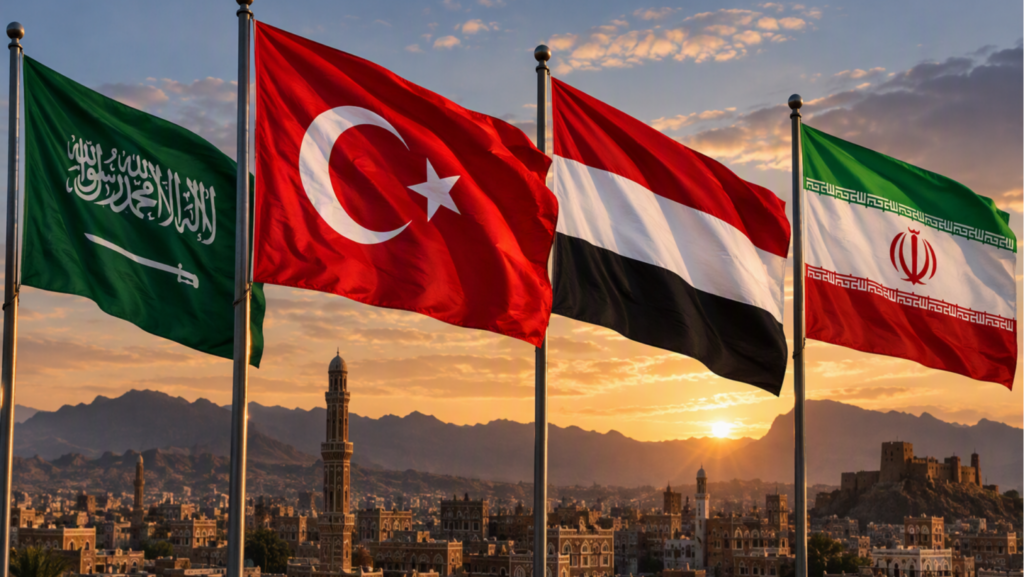
Türkiye’s Role in the Yemen Conflict: Between Regional Influence and a Policy of Balancing
Türkiye’s policy towards the Yemeni conflict reflects a broader transformation in its foreign policy, characterised by a pragmatic balancing among rival regional actors and the pursuit of strategic autonomy.
The Yemeni conflict, the active phase of which began in the first half of the 2010s, remains one of the key crises in the Middle East, having begun as a confrontation between the Houthis and the central government in Sana’a, the conflict quickly spread beyond Yemen’s borders and drew the attention of major regional players, turning Yemen into yet another battleground in the rivalry between Saudi Arabia and Iran. At the same time, Türkiye refrained from active involvement in the conflict, skillfully maneuvering between the sides. However, the signing of the Mecca Joint Defence Agreement in August 2026 could alter the already fragile balance in the Middle East.
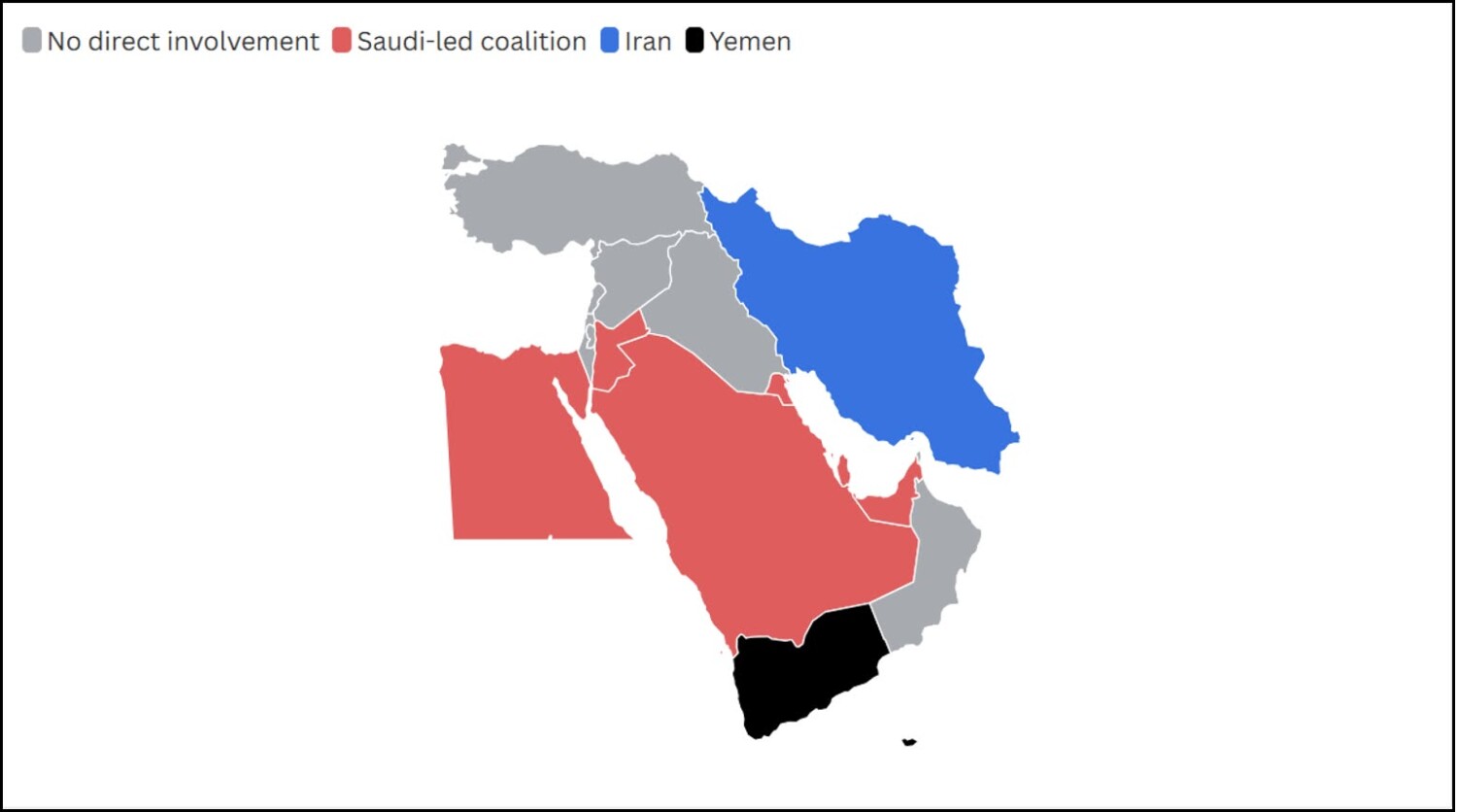
Fig. 1. The sides of the Yemeni conflict.
In the early stages of the conflict, when it had not yet spread beyond Yemen, Ankara, guided by its ‘zero problems with neighbors’ policy, supported Riyadh’s actions. However, after the Houthis gained strength and seized Sana’a, which led to the launch of a full-scale military operation by Saudi Arabia and its allies, Türkiye shifted to a more balanced approach, viewing the conflict in Yemen as part of the broader issue of Iran’s growing influence in the region.
Additional factors contributing to Türkiye’s shift toward a more measured policy regarding events in Yemen included both the ties between the Yemeni Islah Party and the Muslim Brotherhood movement, which is supported by Ankara (Frolov, 2018; Scheglovin, 2021), as well as the sharp deterioration in relations with Saudi Arabia triggered by the murder of Saudi dissident journalist Jamal Kaşıkçı at the Saudi consulate in Istanbul in 2018 (NPR, 2022).
However, there are other explanations for why Ankara refrained from becoming more actively involved in the conflict. First and foremost, it is important to remember that the situation in Yemen remains quite complex due to the large number of actors (both state and non-state) as well as the active involvement of major regional powers, which limits the scope for external intervention. Another significant factor is Ankara’s active regional policy, in the second half of the 2010s, it was already involved in a number of conflicts in the region, both political (the Eastern Mediterranean) and military (Syria), which required the concentration of resources. It is fair to note that the result was Ankara’s shift from a bandwagoning strategy to a hedging one, in which the Turkish authorities sought to maintain opportunities for cooperation with multiple parties simultaneously (Kiras, 2026).
A key feature of this stance is Türkey’s desire to maintain its influence by avoiding involvement in the conflict. On the one hand, Turkey clearly has an interest in containing Iran; on the other hand, excessive support for one side of the conflict could lead to a deterioration in relations with its opponents and narrow Turkey’s window of opportunity for mediation. In this context, the Yemeni conflict serves as a good example of a broader process of transformation in Türkish foreign policy (Rizabayeva, 2022), from active attempts to shape a new regional order to a more pragmatic management of interests.
However, recent events show that Ankara’s role in the Yemeni conflict may change again in the near future. A month after the signing of the Mecca Agreement between Turkey, Saudi Arabia, and Pakistan, which some analysts have already dubbed the ‘Middle Eastern NATO’ (The Conversation, 2026), the Houthis attacked Saudi port infrastructure in the Red Sea (The Times of Israel, 2026) and targets in Riyadh (BBC, 2026). Undoubtedly, this attack is (albeit unintentionally) a test of the Mecca Agreement’s strength, whether it is an effective defensive tool or just another political construct.
Bibliography
BBC (2026) Houthis say they targeted Saudi capital with ballistic missiles. Available at: https://www.nytimes.com/2026/09/24/world/middleeast/saudi-arabia-houthi-missile-attack-yemen-war.html (Accessed: 22 September 2026)
Frolov, A.V. ‘Турция vs арабский мир: прагматичное партнёрство’, Observer, 2018, № 5 (340), pp. 76-93.
Kiras, İ. (2026) ‘Mekke Paktı bizi savaşa sokar mı?’, Karar, 22 September. Available at: https://www.karar.com/yazarlar/ibrahim-kiras/mekke-pakti-bizi-savasa-sokar-mi-1609227
NPR (2022) Turkish court rules that Khashoggi trial should be transferred to Saudi Arabia. Available at: https://www.npr.org/2022/04/07/1091383475/turkey-khashoggi-trial-saudi-arabia (Accessed: 23 September 2026)
Rizabayeva, I.A. ‘Transformation of Turkey’s Foreign Policy Against the Background of Global Challenges’, Oriental Journal of History, Politics and Law, 2022, № 2, pp. 213-221.
Scheglovin, Yu. B. (2021) ‘О связях Турции с йеменским филиалом «Братьев-мусульман»’. Available at: https://www.iimes.ru/?p=74946 (Accessed: 21 September 2026)
The Conversation (2026) A new ‘NATO of the East’? Why the Mecca pact isn’t quite what it seems. Available at: https://theconversation.com/a-new-nato-of-the-east-why-the-mecca-pact-isnt-quite-what-it-seems-289371 (Accessed: 22 September 2026)
The Times of Israel (2026) Houthis say they attacked Riyadh and Aramco facilities in Yanbu. Available at: https://www.timesofisrael.com/liveblog_entry/houthis-say-they-attacked-riyadh-and-aramco-facilities-in-yanbu/ (Accessed: 24 September 2026)