Assessing Marine Rotational Force Darwin 15 Years Later
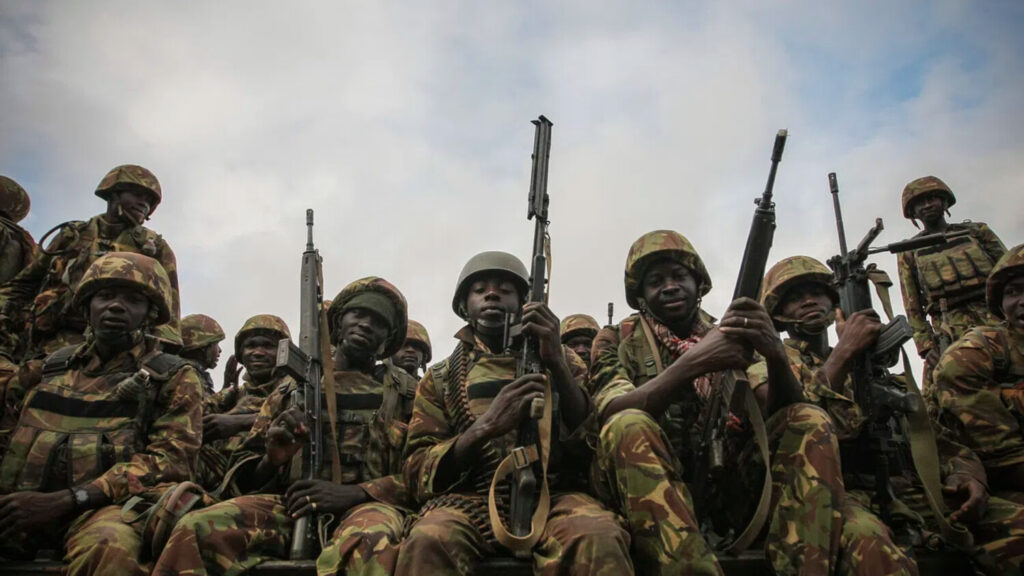
For fifteen years, American Marines have rotated through Darwin, training with Australian and other regional forces as the United States has tried to make its presence in the Indo-Pacific more durable. What began as a limited deployment is now taking on a wider role in a region where military exercises increasingly resemble preparations for the crises they are meant to prevent.
Amid China’s growing force projection in the Indo-Pacific, former U.S. President Barack Obama launched a policy of pivoting to Asia. The renewed American presence in the Indo-Pacific through defense, technology, trade, and cultural engagement, the pivot aimed to strengthen U.S. relations in the region.
Marine Rotational Force-Darwin is a staple of the Asia rebalancing strategy, as it gives U.S. amphibious forces, such as the Navy and Marine Corps, a way to enhance partnerships with the Australian Defence Force (ADF). Marine Rotational Force-Darwin not only gives the United States a new regional doctrine in the Indo-Pacific but also allows the Marine Corps to relearn its amphibious roots after the perpetual wars in Afghanistan and Iraq.
Furthermore, the Australian Defence Force is also relearning how to operate in large-scale exercises and combined arms operations at a time when China’s and Russia’s presence around Oceania threatens Canberra’s security. Now in its 15th year, Marine Rotational Force-Darwin continues to move into Special Purpose Task Force status and is becoming mission-capable enough to partake in regional contingencies.
Obama’s Rebalance to Asia and Implementation of Marine Rotational Force Darwin
In a parliamentary speech in Australia in 2011, then-President Obama announced a pivot to Asia policy, making the Indo-Pacific region a priority for American and allied security. The perpetual wars in Afghanistan and Iraq led to the neglect of other vital regional interests, such as the Indo-Pacific, where China’s soft power grew dramatically.
During the global war on terrorism, China expanded its navy, the PLAN, into the world’s largest naval force. Beijing’s naval force projection extended into the East China Sea, having maritime disputes with Japan, and into the South China Sea, where it clashed with the Philippines. Both countries are mutual treaty allies with the United States.
On the Korean Peninsula, North Korea rapidly expanded its nuclear weapons stockpile and became more aggressive with America’s focus elsewhere. The sinking of the ROKS Cheonan and shelling of Yeonpyeongdo Island showed the need for a greater American presence in the region, as the Indo-Pacific’s stability is vital for America’s defense.
During the state visit to Australia on November 16th, 2011, President Obama and his Australian counterpart, Prime Minister Gillard, announced the start of Marine Rotational Force Darwin (MRF-D). Each interoperability exercise between the United States Marine Corps (USMC) and the Australian Defence Force (ADF) would be a six-month U.S. deployment to RAAF Base Darwin in the Northern Territory.
How Marine Rotational Force Darwin Improves the American and Australian Alliance
After initially deploying 600 Marines, rotations would grow to more than 2,500. Deployments include live-fire exercises, quick-reaction, anti-ship containment, logistical movements, intelligence gathering, and unit enhancement.
A key focus of Marine Rotational Force Darwin is unit interoperability between the USMC and ADF. MRF-D also conducts multilateral exercises with other regional countries.
Countries such as France, Timor-Leste, Japan, Indonesia, New Zealand, the Philippines, and Papua New Guinea, amongst others, have conducted joint training alongside MRF-D. Key joint exercises include Talisman Sabre, Balikatan Alon, and Super Garuda Shield.
MRF-Darwin has earned the Pentagon’s trust to conduct live-fire exercises with new weapon systems such as the Typhon mid-range capability missile launcher. During Exercise Talisman Sabre 25, the Typhon was used in Darwin, where mobile targets can be targeted from 499 kilometers away.
Future Status of MRF-Darwin
On May 3rd, 2026, MRF-Darwin 26 achieved a crucial certification for a direct Special Purpose Marine Air-Ground Task Force (SPMAGTF). The certification reflects the extraordinary duties MRF-Darwin is given, including interoperability, deployment in potential regional conflicts, and crisis response for contingencies, particularly in the South China Sea or Taiwan.
Prioritizing unit rotations to certify SPMAGTF status will need to be a future standard bearer, especially if U.S. forces become overstretched to the point where MRF-D could be activated for any crisis response in the Indo-Pacific. For example, logistical support such as evacuating American and foreign nationals to Australia during a crisis, such as a Taiwan contingency, can be an effective mission for MRF-D under an SPMAGTF certification.
Continuing to enhance MRF-Darwin will be a priority, especially as rotations continue to branch out of Australia and grow regional cooperation with Indonesia, New Zealand, Papua New Guinea, and the Philippines, among others. The U.S. neglected the Indo-Pacific region for two decades and continued exercises and relations with countries in the region that could help mitigate PLAN power projection.
Lastly, MRF-D is worth the expenditure, with a $2 billion cost-sharing framework between Washington and Canberra. Sustaining low-cost rotations will be valuable for future congressional funding and, perhaps, a launch pad to continue expanding MRF-Darwin.
Fifteen years in, Marine Rotational Force-Darwin remains valuable to America’s pivot to Asia and to enhancing relations with Australia in Oceania. As a low-cost, high-value crisis-response rotation, MRF-Darwin not only strengthens the ANZUS alliance with Australia but also enhances bilateral ties across Southeast Asia at a time when U.S. force projection is needed in the Indo-Pacific region.