Why America Should Be More Diplomatically Engaged With Myanmar
With China becoming an increasingly prominent superpower in the critical minerals sector, its influence is extending all across Southeast Asia, especially in Myanmar. If the U.S. wants to become more influential in this sector, it needs to reshape its diplomatic Myanmar strategy.
The United States, a front-line global superpower, is facing major competition from China, a country that rivals the U.S. and is gaining a major edge on critical minerals. In Southeast Asia, China has found a major client in the critical minerals monopoly with Myanmar, a deteriorated nation where U.S. soft power engagement has been rare.
The critical mineral shortages intertwine with regions and countries with which the United States has failed to hold concrete diplomatic efforts, and Myanmar is no exception to this. However, ending a brutal civil war, having diplomatic influence in the war-torn country, and perhaps enhancing bilateral trade can be beneficial for both Washington DC and Naypyidaw, Myanmar.
The American Blindspot in Southeast Asia
Amid cuts in the State Department taken by the second Trump Administration, China has expanded its diplomatic presence in the Indo-Pacific with Myanmar. Utilizing the Belt and Road Initiative along with its vast geography, Beijing solidified a cross-border trade with Naypyidaw through its landlocked Yunnan province, which gives China further access to the Indian Ocean.
Currently, China’s and Myanmar’s trade totals $19.4 billion, with $3.73 billion as of January and February 2026. China has taken advantage of Myanmar’s long-standing international isolationism due to Western sanctions, resulting in Naypyidaw’s heavy dependence on Beijing.
Consolidating ties with the junta (Tatmadaw) and several armed factions, China’s goal is to have full access to Myanmar, which would allow Beijing to have a consistent stream of untapped rare earth minerals in which most other countries fall behind.
For America, the exact opposite of diplomatic engagement has occurred in Myanmar. Major cuts to the U.S. Agency for International Development (USAID) and a top-down reduction in foreign service officers have left American influence at a minimal level in Southeast Asia. As a result, Myanmar is experiencing a significant reduction in outreach by Washington.
Furthermore, U.S. foreign policy towards Myanmar has been sanctions-heavy without diplomatic back channels. This void has left the Tatmadaw towards stronger relations with Russia and China. Additionally, due to various resistance groups in the country that are not on track to overthrow the junta, U.S. policy to tackle these issues has been nearly non-existent.
Diplomatic Engagement Could Help Bring U.S. Soft Power Back to Southeast Asia
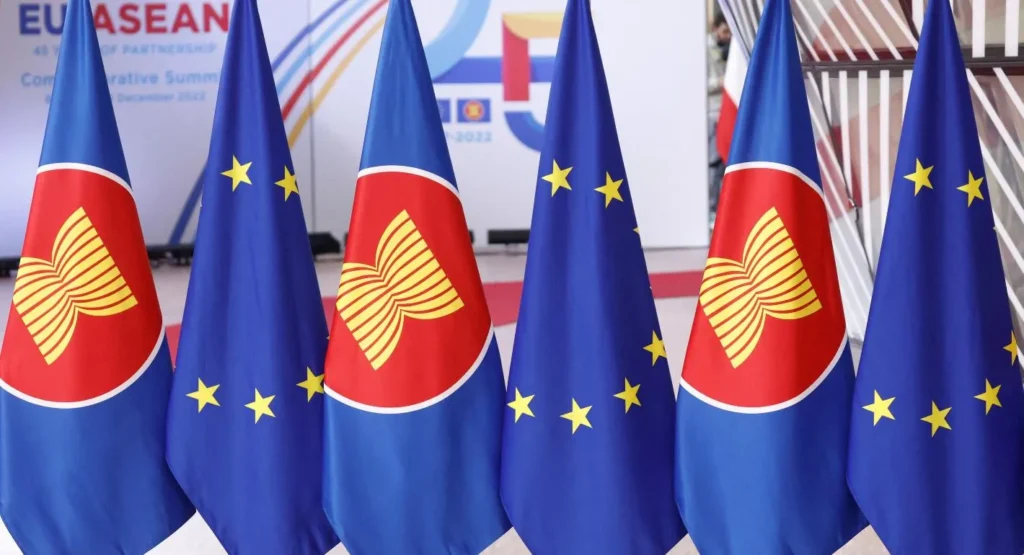
The United States has a unique opportunity to reinvigorate its Myanmar strategy through American-sponsored initiatives via the Association of Southeast Asian Nations (ASEAN). Prior to USAID cuts, American investments in educational programs within Myanmar took place through the U.S.-ASEAN Business Council. Initiatives such as the Diversity and Inclusion Scholarship Program and the Myanmar Scholarship Fund aimed to give Burmese education opportunities that were seldom available in the region. The Center for Strategic and International Studies (CSIS) suggested that the U.S. refocus on educational programs within Myanmar’s youth, who are the antithesis of the Tatmadaw and could shape the future for democracy in the country.
Furthermore, the United States can build upon Myanmar’s youth and its plight for democratic institutions. A State Department-centric focus on Burmese young professionals in exile and collaboration with regional trading partners could help mold Myanmar’s future leadership and give them a platform for research and diplomatic conferences.
Noted by the Stimson Center in November 2024, a Policy Coordinator/Special Representative has been absent from Myanmar for over a decade. The State Department could remedy soft power gaps by appointing a key Envoy that focuses on Myanmar’s cataclysm and working with neighboring countries that could provide solutions to counter China’s influence, such as India and Thailand.
Leveraging Diplomacy Through Recommendations
In order to re-engage diplomatic efforts with Myanmar, the State Department will need to allocate resources that have primarily been absent under the Trump Administration’s soft power strategy. As aforementioned, cuts and a lack of urgency to nominate and assign ambassadors are costing America its global soft power presence against China and Myanmar is adversely affected.
The Tatmadaw is heavily reliant on China. With continued massacres and human rights abuses, the U.S. can enact secondary sanctions against all companies that conduct business with the junta, including Chinese government-linked entities. Renewing humanitarian aid and refugee program allocations will help bring in American soft power, which is going through a decline due to USAID cuts.
Lastly, enhancing diplomatic engagement through ASEAN and promoting further economic collaboration would be welcomed. However, this would require Washington to reassess its tariffs and trade war policies that Beijing has benefited from. Promoting democracy and anti-junta democratic factions should be a primary effort, with American engagement with the National Unity Government being a critical first step in bringing back Western influence in Southeast Asia.
American rapprochement with Myanmar will need a pragmatic, thorough several-year plan because a lack of soft power regional engagement and programs has led to China filling this void. Promotion of future Burmese youth leaders in exile, humanitarian aid allocations, and working with ASEAN and regional partners are steps the U.S. State Department needs to take amid a lack of force projection in Southeast Asia.