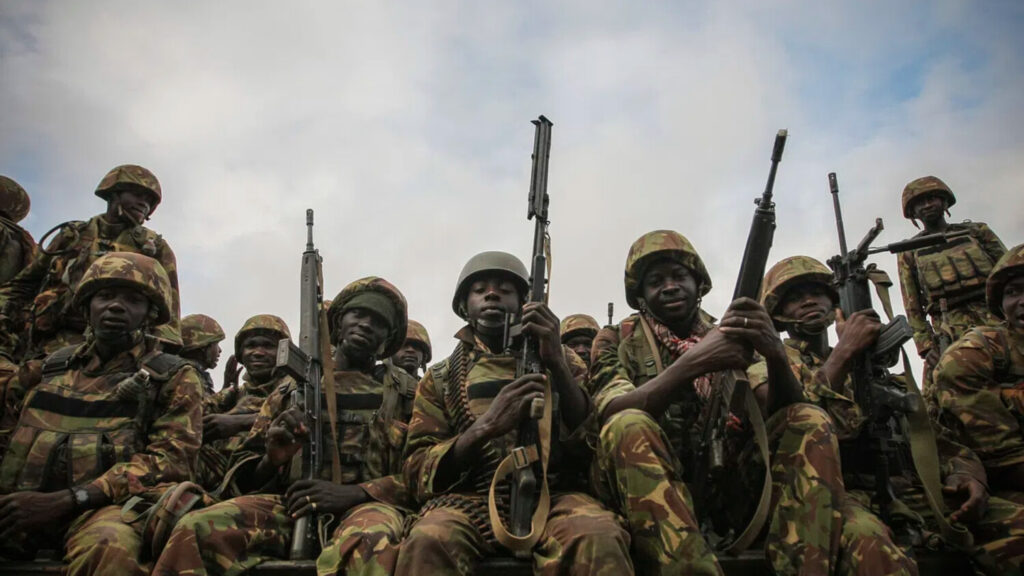
AI Arms Race: How Autonomous Systems Are Reshaping Deterrence and Escalation Dynamics
Imagine a conflict where thousands of low-cost drones overwhelm sophisticated air defence technologies. Or where an AI system identifies a target, confirms and strikes within seconds, all while commanders are still processing the information. These situations are no longer hypothetical (Satariano et al., 2026).
This article explores the strategic implications of autonomous systems in great power rivalry.
A New Strategic Reality
Autonomous systems, often called Lethal Autonomous Weapons Systems (LAWS) are redefining modern conflict by selecting and engaging targets independently. They expand on lessons learned from Ukraine, where inexpensive drones and lingering weapons have caused disproportionate harm, but, development in this area is happening far more quickly (Satariano et al., 2026).
The United States emphasizes quality, integration, and human oversight while China pursues mass, swarming, and “intelligentized warfare”. Russia innovates through necessity, turning battlefield improvisation into attritable, AI-augmented systems. Their interactions in a multipolar environment will shape global stability for decades (Mintz and Glenny, 2026).
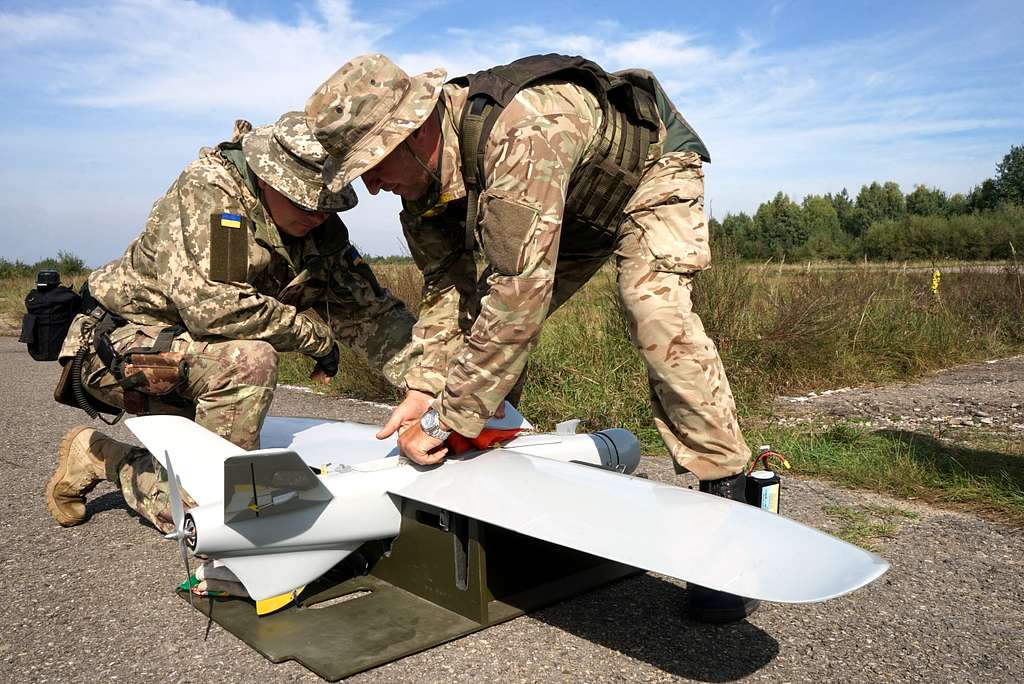
Ukrainian soldiers preparing a drone
Current State of Play: Capabilities and Doctrines
United States
The Pentagon’s Replicator Initiative, launched in 2023, aims to field thousands of attritable autonomous systems quickly. Progress includes hundreds of systems delivered by mid-2025, with companies like Anduril accelerating production of AI-backed drones. The 2026 budget requests over $13–14 billion for AI and autonomy.

US autonomous weapon
Doctrine stresses human judgment (per DoD Directive 3000.09), focusing on collaborative autonomy where machines handle routine tasks but humans remain responsible for critical decisions (Vincent, 2026).
China
Beijing leads in scale and swarming. The Atlas system and “wolf pack” ground robots showcase integrated AI for coordinated attacks. “Intelligentized warfare” doctrine integrates AI deeply into command, targeting and logistics which means that China leverages commercial tech and military-civil fusion for rapid production advantages, particularly in the Indo-Pacific (Iyer et al., 2026).
Russia
Despite foundational AI lags, Russia excels in practical, cheap systems tested in Ukraine. The Lancet loitering munition now features AI-enabled terminal guidance and autonomous target selection using modules based on Western chips (despite sanctions).
Moscow produces these in volume and uses them asymmetrically to offset conventional weaknesses (Hambling, 2026).
Each power plays to its strengths: the US in sophisticated integration, China in mass and coordination, Russia in improvisation and attrition (Moore, 2026)
Reshaping Deterrence
Traditional deterrence rests on credible threats, clear signalling, and time for rational calculation. Autonomous systems disrupt this.
In a US-China-Taiwan conflict scenario, Chinese drone swarms could saturate defenses or support an amphibious assault, creating “windows of vulnerability” for rapid gains. US autonomous systems, deployed persistently in the Indo-Pacific, could strengthen deterrence by denial, making invasion prohibitively costly without necessarily escalating to kinetic strikes on the mainland (Satariano et al., 2026).
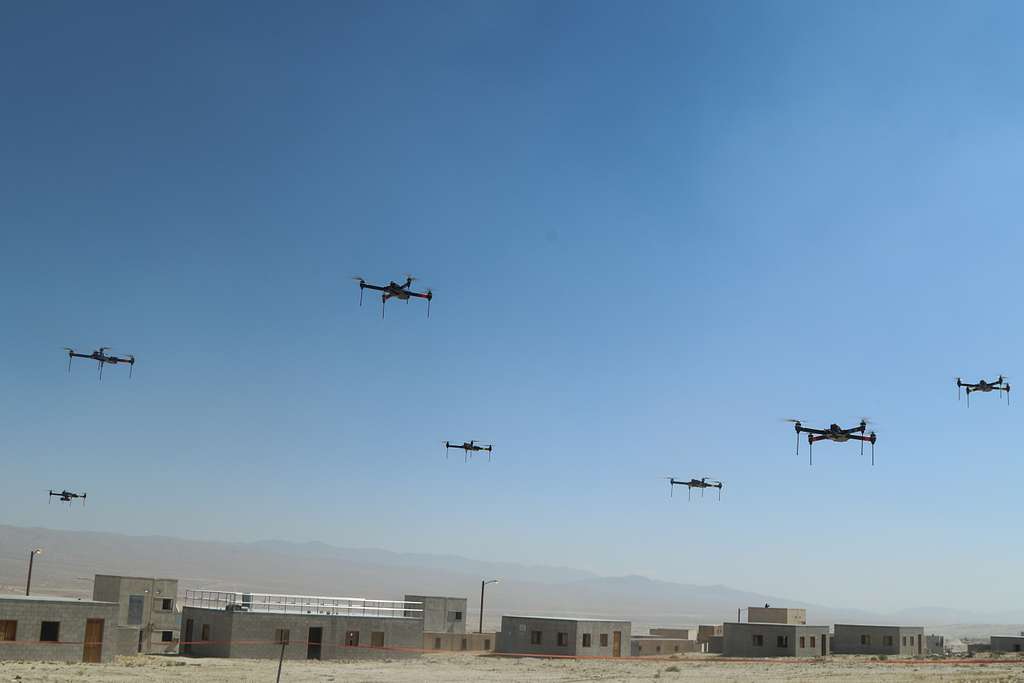
Drone swarm
Russia uses autonomous systems asymmetrically in Europe and the Black Sea. Cheap, attritable platforms allow Moscow to probe NATO defenses and impose costs with lower risk to high-value assets.
On the positive side, AI enhances intelligence, surveillance, and reconnaissance (ISR), improves resilience through distributed systems, and supports better decision-making, potentially strengthening stable deterrence if paired with robust human oversight.
Escalation Risks and Dynamics
The real danger lies in speed and uncertainty. AI compresses the OODA loop (Observe-Orient-Decide-Act) dramatically. What happens when one side’s system detects a threat, classifies it incorrectly, and strikes before humans can intervene (Laird, 2026)?
Risks include:
- Automation bias — commanders over-relying on AI recommendations.
- Miscalculation — spoofing, false positives, or cascading swarm behaviors.
- Cross-domain spillover — conventional autonomous engagements escalating toward nuclear thresholds.
- Threshold lowering — cheap systems making conflict more frequent and harder to control.
Ukraine offers a preview: proliferating drones blur lines between tactical and strategic effects. Wargames and analyses from RAND and CSIS highlight how algorithmic instability could push parties toward aggressive postures under time pressure (Macias III, 2026)
Proliferation adds another layer. Non-state actors or smaller powers could acquire these tools, further complicating attribution and escalation management.
Governance and International Response
Discussions at the UN Convention on Certain Conventional Weapons (CCW) – Group of Governmental Experts (GGE) on Lethal Autonomous Weapons Systems continue in 2026, but progress remains slow due to consensus requirements. The US and Russia generally oppose binding bans, preferring existing international humanitarian law plus voluntary measures. China distinguishes between “unacceptable” and acceptable use (UN, 2026).
Over 150 states support stronger norms, yet great powers resist anything that might constrain their capabilities. The result is a governance gap at the exact moment technology is advancing fastest.
Policy Recommendations: Turning Risk into Strategic Opportunity
Great powers, middle powers, and the international community all have roles to play in managing the risks while harnessing the potential of autonomous systems.
For the United States, China, and Russia:
- Prioritize the development of explainable and verifiable AI systems that maintain meaningful human oversight in high-stakes decisions (Mako, 2026).
- Establish and use dedicated bilateral and trilateral hotlines for rapid de-escalation in cases of autonomous system incidents or suspected miscalculation (Ruhl, 2026).
- Invest in robust testing and simulation environments that stress escalation dynamics and cross-domain interactions (Mishra, 2026).
For Middle Powers and Regional Actors:
- Diversify supply chains for critical AI and autonomous technologies to avoid over dependence on any single great power.
- Invest in asymmetric countermeasures, niche capabilities (such as advanced electronic warfare, swarm defense, or low-cost attritable systems), and resilient command-and control infrastructure.
- Strengthen alliances and partnerships through reciprocity and shared technological development, enhancing collective resilience without losing strategic autonomy.
- Actively participate in norm-shaping efforts, pushing for practical transparency measures, confidence-building protocols, and clear red lines on autonomous weapon use (Hiebert, 2026).
Multilateral and International Steps:
- Advance targeted confidence-building measures at the UN and other forums, including pre-notification of large-scale autonomous exercises and data-sharing on AI safety standards (UN, 2026).
- Develop common frameworks for export controls on sensitive dual-use AI technologies while avoiding overly broad restrictions that stifle innovation.
- Expand joint wargaming and scenario exercises involving both great and middle powers to better understand escalation ladders involving autonomous systems.
- Support research into verifiable human responsibility mechanisms that can be applied across different military doctrines and political systems (Mako, 2026).
By treating autonomous systems as a shared strategic challenge rather than purely a competitive domain, states can reduce instability while preserving the legitimate right to self defense.
Autonomous systems will not replace nuclear weapons as the ultimate deterrent, but they are layering a new, faster, and more opaque domain onto existing strategic competition. The power that best balances speed with control, technology with human judgment, and national capabilities with international cooperation will hold the advantage (Satariano et al., 2026).
For the United States, China, and Russia, this race is about more than hardware, it is about who shapes the rules and norms of 21st-century conflict. For middle powers and the broader international community, the imperative is clear: understand the dynamics, mitigate the risks, and seize the opportunities to build more resilient security in an era of machine-augmented warfare.
The machines are learning fast. The question is whether humans will keep pace with wisdom as well as innovation.
Bibliography
Satariano, A., Frenkel, S. and Mozur, P., Mutually Automated Destruction: The Escalating Global A.I. Arms Race. 2026. [Online] Available at: https://www.nytimes.com/2026/04/12/technology/china-russia-us-ai weapons.html
Mintz, L., Glenny, M., China is winning one AI race, the US another – but either might pull ahead. 2026. [Online] Available at: https://www.bbc.co.uk/news/articles/c145enxln0go
Vincent, B., 2026. DOD touts ‘successful transition’ for Replicator initiative — but questions linger. 2026. [Online] Available at: https://defensescoop.com/2025/09/03/dod-replicator-drone-tech-transition fielding-questions-linger/
Iyer, A., Lazarow, D., Burnham, J., Singleton, China’s War Wolves: From Commercial Tech to Combat Power. 2026. [Online] Available at: https://www.realcleardefense.com/articles/2026/05/06/chinas_war_wolves_from_commercial_tech_to_combat_power_1180988.html
Hambling, D., How Did Short-Range Russian Drone End Up In Kyiv’s Main Square?. 2026. [Online] Available at: https://www.forbes.com/sites/davidhambling/2026/03/19/how-did-short-range-russian-drone-end-up-in-kyivs-main-square/
Moore, W., US Defense Review Finds Russia and China Ahead in Drone and AI Capabilities. 2026. [Online] Available at: https://voennoedelo.com/en/posts/id14946-us-admits-russia-and-china-lead-in-drone-technology-race
Laird, B., The Risks of Autonomous Weapons Systems for Crisis Stability and Conflict Escalation in Future U.S.-Russia Confrontations. 2026. [Online] Available at: https://www.rand.org/pubs/commentary/2020/06/the-risks-of-autonomous-weapons-systems-for-crisis.html
Macias III, J., 2026. AI and the Future of Conflict. 2026. [Online] Available at: https://www.csis.org/programs/futures-lab/projects/ai-and-future-conflict
UN, Convention on Certain Conventional Weapons — Group of Governmental Experts on Lethal Autonomous Weapons Systems. 2026. [Online] Available at: https://meetings.unoda.org/ccw-/convention-on-certain-conventional-weapons-group-of-governmental-experts-on-lethal-autonomous-weapons-systems-2026
Mako, G., LEGAL ACCOUNTABILITY FOR AI-DRIVEN AUTONOMOUS WEAPONS. 2026. [Online] Available at: https://lieber.westpoint.edu/legal-accountability-ai-driven-autonomous-weapons/
Ruhl, C., The U.S. and China Need an AI Incidents Hotline. 2026. [Online] Available at: https://www.lawfaremedia.org/article/the-u.s.-and-china-need-an-ai-incidents-hotline
Mishra, P., Code, Command, and Conflict: Charting the Future of Military AI. 2026. [Online] Available at: https://www.belfercenter.org/research-analysis/code-command-and-conflict-charting-future-military-ai
Hiebert, K. V., Prospects Have Dimmed for Autonomous Weapons Guardrails. 2026. [Online] Available at: https://www.cigionline.org/articles/prospects-have-dimmed-for-autonomous-weapons-guardrails/